

The correlation between quality, interconnected transport infrastructure and growth was central to discussions at this year’s UKREiiF event, as Lucy Prior, Octavius’ Business Development Lead for Rail explains.
“Connectivity is key. If you make journeys easier and connect people better, the product is so much more deliverable. Without connectivity, places struggle to attract development, even if there’s demand. More investment in infrastructure would be a huge catalyst:” Philip Murphy, Director, Sheet Anchor Evolve – writing in the UKREiiF Insights Report 2026 – sets out the symbiotic relationship between housing and transport, investment and growth.
UKREiiF is an annual, three-day forum for the real estate, investment and infrastructure sectors; key messages from the 2026 event included the significance of place, the need for project viability, and the importance of long-term investment to underpin even longer-term socially-positive outcomes.
Bringing local needs to the fore
Devolution and the evolving role of combined authorities is heightening the appetite and need for new funding combinations. Alongside the City Region Sustainable Transport Settlements, local and combined authorities, the wider public sector and private investors are exploring the whys and hows of bringing public/private partnerships to bear for mutual benefit.
What comes with this is the requirement to balance financial viability against investment decisions that put local needs at the forefront of all plans. In essence the PPP of the public/private partnership must also satisfy the ethos of people, place and partnership.
People need places to live, these places need to be well connected to the region and the nation; and there is currently a highly tangible link between the Government’s own housing targets, and place-based, integrated transport intent. This intertwining of housing and transport planning is shaping the wholesale regeneration of brownfield sites across the country. According to the UKREiiF Insights Report 2026, “Nearly two-thirds of development and funding organisations expect to increase activity over the next 12 months, with prominent opportunities including residential, regeneration and public sector-led activity.”
The focus on place and people as the bedrock defining best design, delivery and interconnection is critical. Bringing places back to life in the now, but to benefit generations to come, is the challenge that mayors and authorities need to address sensitively, and community engagement is central to this.
During UKREiiF’s “Beyond the Tracks: how rail-led regeneration can shape better places and stronger communities” debate, Tammy Whitaker – Derby City Council’s Director of City Growth and Vibrancy – explained, “Community engagement is hard. It doesn’t start with design, but with how people want to use a place, what they experience. It’s iterative we must keep engaging. The real issue is that regeneration takes a long time. It is important to know who you’re building it for and why and this all depends on circumstances and place.”
Preventing residential islands
People-centred defining and designing therefore becomes the starting point, but what must follow is the correct partnerships to deliver the infrastructure needed to ensure that these homes do not become residential islands. Authorities, architects and infrastructure experts all agree on the intrinsic benefit of residential regeneration including appropriately integrated transport options.
During the same debate Andrew Ferguson, acting CEO of property development company Platform4 explained that they are constantly self-auditing by asking how regeneration actually offers public value. The scale of their target – 40,000 homes over the next 10 years – represents £6 billion of public value alongside £10 billion of private, and to ensure best public value Platform4 wants to develop “Exemplar regeneration around transport hubs.”
Ferguson believed that best public value is realised through good partnerships: “We have to take a long-term view … on selecting partners, on asking how do we procure, how do we embed infrastructure? It’s never just bricks: choosing those partners with those things in mind is essential.” Ultimately he noted that, “It is in our interests and remit to get more developers and contractors in our railway.”
PPPs must be cognisant, therefore, of the potential for symbiotic relationships with their construction partners and wider value chains – organisations which are to a degree asking themselves the same questions as their potential PPP clients.
From aspiration to delivery
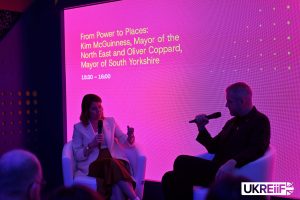
Throughout UKREiiF 2026 the question at the forefront of Octavius’ minds was about the role we can play in delivering the next generation of transport infrastructure that complements the ways in which devolution is shaping public/private partnerships. Combined Authorities are central to this, and the figureheads that our metro mayors have become should not be disregarded. As Mayor of the North East Kim McGuinness explained during UKREiiF 2026, “We are people of our place: Place first, party second. Mayors are considered the voice of our regions”.
Twinning that voice with people and place-based thinking is central to not only the community engagement described above, but also central to regenerating in a way that aligns with community needs. Sanit Sull, Director of Legal, Governance & Compliance at East Midlands Combined Authority explained that the changing role of mayors and Mayoral Combined Authorities (MCA) enables truly place-based thinking. “What it does do is let us look at high priority tricky sites in a whole new way. It is not about exerting power, but about using it to shift the conversation. We can exercise power to bring people along, to do with, not do to.”
Further, quicker, deeper
Caroline Simpson, CEO, Greater Manchester Combined Authority (GMCA) used UKREiiF 2026 to reflect on ‘Manchesterisation’, the seismic shifts seen in the city across the last decade. The productivity gap between Manchester and London has become smaller, something Simpson attributed to the city’s ability to collaborate, “Deep collaboration is in the blood of Manchester” which is why the GMCA has been able to develop true public/private partnerships that have and will continue to help the city region develop “further, quicker, deeper.”
Place and people remain at the core of GMCA partnerships – made up of 10 constituent local authorities with huge demographic differences, which means one size cannot fit all. Simpson elaborated on how GMCA plans to address this, we will “tackle inequality as a whole-system/whole-place” and in doing so develop funding mechanisms focussed on long-term out comes, not short-term returns, “Outcome frameworks allow us to co-resource, to get closer to making a difference for communities. It’s about defining cost, quality, social value and value to community.”
At the heart of GMCA’s success is the fact that they do not see a trade-off between public value and delivery. Describing Manchester’s asset-led regeneration Simpson added, “Great new assets made a difference, especially in areas of hugest deprivation … we appraise on how regeneration unlocks access to jobs, healthier places, and provides access to transport.” Making that link between housing, regeneration and transport is vital, GMCA has found that bringing transport hubs and interchanges into under privileged neighbourhoods can be a real catalyst for change. Good transport creates connectivity, creates opportunity, opens up access to education, training and jobs.
There was an overall air of positivity at UKREiiF, but an honesty in that the private sector needs to understand the viability of what working with the public sector means. The insight report states that “While confidence has undoubtedly softened, there is still appetite to move where opportunities are viable and where there is clearer demand or policy support.” Public/private partnerships that truly recognise the importance of people and place will ensure that people can “Stay close but go far,” in the words of Oliver Coppard, Mayor, South Yorkshire MCA. The sheer scale of change that can be brought about by the best partnerships, better connectivity and integration in every respect should not be underestimated.
We hope you found this helpful, here is some more information you might find valuable:
- New housing developments embrace multi-modal connectivity
- Integration through devolution: Our response to the government’s Integrated Transport Strategy
- Transport unlocks everything: Combined authorities’ goals for transformative regional transport
- Harmonising delivery: The importance of the integrator
Talk to us
Contact us at transformative@octavius.co.uk if you want to know more about the way in which we can support combined authorities’ transport strategies.